
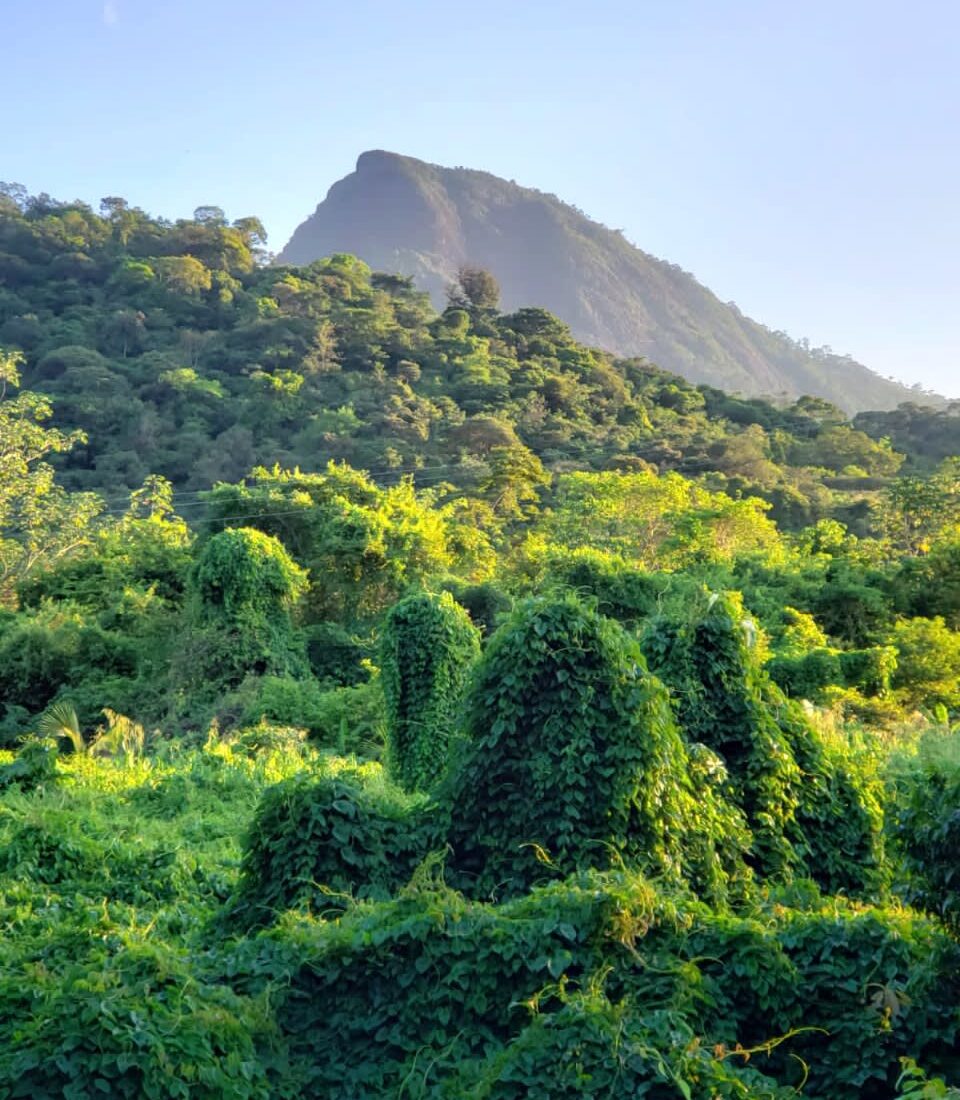
Ask anyone who has made the long drive south from Georgetown and they will tell you the same thing: the Rupununi feels bigger than the rest of Guyana. Rainforest gives way to open savannah, the Kanuku Mountains rise on the horizon, and the animals that live here are some of the largest of their kind anywhere. This is a quick, honest guide to Rupununi wildlife: what lives here, where it lives, and what you might realistically see on a road trip through the region.
Why the Rupununi is wildlife country
The Rupununi mixes three habitats in one region: grassland savannah, gallery forest along the rivers, and the forested Kanuku Mountains. The Protected Areas Trust says the Kanukus have the highest recorded bat diversity in the world, with 89 species, and describes healthy populations of rare and endangered “giants” there, including the giant river otter, harpy eagle, giant anteater, black caiman and giant river turtle.
Just to the north, the Iwokrama forest, which the road to Lethem crosses, has recorded 130 mammal species, 86 of them bats. The Macushi and Wapishana peoples have lived alongside this wildlife for generations, and much of the region’s conservation is community-led.
The Rupununi “giants” to know
Giant anteater
The Guyana Tourism Authority calls the Rupununi grasslands home to the world’s largest anteater. With its long snout, tiny eyes and huge bushy tail, it is unmistakable. Anteaters are usually seen on open savannah in the cooler early morning or late afternoon, so keep an eye on the grass if you are travelling at those times.
Giant river otter
Guyana’s giant river otters are the largest otters in the world. They live in family groups on the rivers and creeks of the North Rupununi, with the Karanambu area best known for them. You will need a river trip, not a road trip, to have a real chance.
Black caiman
The black caiman is the largest member of the alligator family. The Tourism Authority notes it is found in abundance in the Rupununi and Rewa rivers. Caiman are most active at night, when their eyes shine in a torch beam.
Harpy eagle
The harpy eagle lives in the untouched canopy of the Kanuku Mountains and the Iwokrama forest. It is a powerful raptor that hunts monkeys and sloths, and seeing one usually takes a local guide who knows an active nest.
Jaguar and arapaima
Jaguars live in Guyana’s protected areas but are shy and rarely seen. Treat any sighting as pure luck. The arapaima, one of the world’s largest scaled freshwater fish, lives in the oxbow lakes and ponds of the Rupununi and Rewa river system, where Indigenous communities protect it.
What you might see from the road
We want to be straight with you: our Rupununi Brazil Experience is a road trip to Lethem and Boa Vista, not a wildlife safari. You get the landscapes, the forest, the savannah and the Kanuku Mountains in view, and sometimes an anteater, birds or monkeys along the way. We can’t promise any particular animal.
If you want more time in the forest, the optional Iwokrama Canopy Walkway lets you walk among the treetops (GYD 7,000 per person in 2026, not included in the tour price). Park entrance fees are also paid separately.
Rupununi Brazil Experience at a glance
- 4 days: 1 night in Lethem and 2 nights in Boa Vista, Brazil
- GYD 125,000 per person or GYD 245,000 per couple
- Includes all transportation, hotel accommodation and breakfast on all 3 mornings
- Deposit: GYD 10,000 per person, due within 48 hours of your reservation being set up
- Check-in 5:00 pm at Popeyes, Vlissengen Road, next to Survival Supermarket; departure 7:00 pm
- Next departure: November 19–23, 2026; later dates to be announced
For the route itself, read our guide to Guyana to Brazil by road.
Tips for spotting wildlife in the Rupununi
- Watch at dawn and dusk. Most large animals are active when it is cooler.
- Bring binoculars. Savannah animals and canopy birds are often far away.
- Keep your distance. Never chase, feed or crowd an animal, and give caiman plenty of space near water.
- Think about the season. Water levels change where animals gather; see our best time to visit Guyana guide.
- Respect the communities. Much of this land is titled Indigenous land; follow local guidance.
FAQ
What animals live in the Rupununi?
Giant anteaters, giant river otters, black caiman, harpy eagles, jaguars, arapaima and giant river turtles, plus monkeys, capybara and a huge variety of birds and bats.
Will I see a giant anteater on your tour?
Maybe. Anteaters are sometimes seen on the savannah, especially early in the day, but our tour is a road trip and we can’t promise any sighting.
Where are giant otters found in Guyana?
On the rivers of the North Rupununi, especially around Karanambu, and in the Iwokrama forest.
How much is the Rupununi Brazil tour?
GYD 125,000 per person or GYD 245,000 per couple, with a GYD 10,000 per person deposit. See all our trips on the tours page.
Book your Rupununi trip
Want to see the savannah, the Kanukus and the road to Brazil for yourself? Ask us about seats on the next departure. Call or WhatsApp +592-718-2515.
