
If you spend enough time around Guyana’s rivers, you may eventually hear a quick whistle coming from the water. A few seconds later, a dark shape may surface, disappear, and then pop up again farther along the river, it could be a giant river otter.
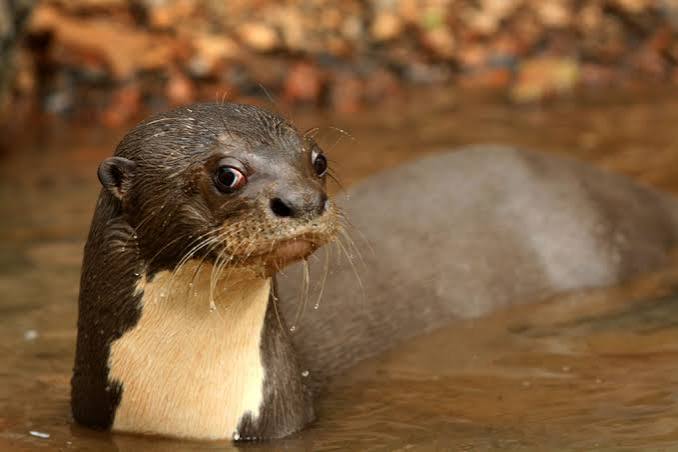
Table of Contents
Known scientifically as Pteronura brasiliensis, the giant river otter is one of the most impressive mammals found in South America. It is also one of Guyana’s most fascinating freshwater animals. These otters are fast swimmers, skilled hunters, and highly social creatures that often live in family groups.
Visitors travelling to Kaieteur Falls and Orinduik Falls may be lucky enough to see one. However, a sighting is never guaranteed. Giant river otters move quickly, cover large areas, and can disappear into the river before visitors have time to take a photograph.
A Giant Among Otters
What a well deserved name. The giant river otter is the largest otter species in the world, with a long body, short legs, webbed feet, and a powerful tail.
Its fur is usually dark brown and can look almost black when wet. The cream-coloured markings on its throat and chest are especially distinctive. These markings are different from one otter to another, almost like individual fingerprints.
Giant river otters are perfectly suited to life in the water. Their ears and nostrils close when they dive, while their whiskers help them detect movement nearby. They can turn quickly underwater and chase fish through shallow channels and river margins.
They may look playful and friendly, but they remain wild predators. Their speed, teeth, and strong jaws deserve respect.
Around Kaieteur Falls
Kaieteur Falls is famous for its spectacular drop and remote rainforest setting. The wider area includes rivers, streams, rocky channels, and forested waterways that support a remarkable range of wildlife.
The waterfall itself is not necessarily the best place to look for giant river otters. These animals generally prefer calmer parts of rivers, quiet creeks, lakes, wetlands, and sheltered riverbanks. They need places where they can hunt, rest, raise their young, and move safely between the water and the shore.
While visiting the Kaieteur region, keep an eye on calm stretches of water and shaded riverbanks. A guide may also point out signs of otter activity, such as tracks, slides, fish remains, or repeated calls.
Sometimes, the first sign of a giant river otter is not visual at all. You may hear a sharp whistle or notice a sudden splash before the animal disappears beneath the surface.
Around Orinduik Falls
The scenery is very different from Kaieteur, with broad river views, rock formations, open areas, and surrounding forest.
This combination of habitats makes the wider region interesting for wildlife. Giant river otters may travel along the river in search of fish, using quieter sections for feeding and sheltered banks for resting.
A family group can be surprisingly entertaining to watch. One otter may dive while another keeps watch from the bank. The younger animals may chase one another, roll in the water, or play near the edge before the whole group moves on.
They are quick, though. Even when a group is visible, it may only remain in one place for a short time.
What Do Giant River Otters Eat?
Fish make up most of a giant river otter’s diet. They may catch catfish, cichlids, characins, and other species found in freshwater rivers.
They can also eat:
- Crabs and other crustaceans.
- Frogs and other amphibians.
- Snakes.
- Turtles.
- Small caimans.
- Other small aquatic animals.
Giant river otters are active hunters and often feed during the day. Family members may hunt in the same area, diving and resurfacing as they search for prey.
Their dependence on fish makes clean, healthy rivers extremely important. When pollution or overfishing reduces fish populations, otters can struggle to find enough food.
Family Life and Communication
Giant river otters are social animals. They often live in family groups made up of parents, young otters, and older offspring that remain with the family for a time.
They use many different sounds to communicate, including whistles, chirps, and sharp calls. These vocalisations help them stay together, warn of danger, and maintain contact when visibility is poor.
Their family groups are also known for their playful behaviour. Young otters may wrestle, chase each other through the water, or slide along muddy riverbanks. Although this looks like simple fun, play helps them develop the skills they will need for swimming, hunting, and living with the group.
Signs of a Giant River Otter
Even if you do not see an otter, you may find evidence that one has been nearby. Local guides may look for:
- Small tracks in mud or sand.
- Slides leading from the bank into the water.
- Fish remains.
- Resting areas along the riverbank.
- Dens in suitable banks.
- Scent-marking locations.
- Whistles or other otter calls.
Wildlife signs can be difficult to identify without experience. A local guide can explain whether tracks or markings are fresh and what they may reveal about the animals using the river.
Why Conservation Matters
The giant river otter is listed as Endangered. In the past, hunting for its fur caused serious population declines. Today, the species continues to face threats from pollution, habitat loss, disturbance, declining fish stocks, and damage to riverbanks.
Conservation efforts in Guyana include community monitoring, wildlife education, and protection of important river habitats. Projects in regions such as the Rupununi have shown how local communities can play an important role in protecting otters and the rivers they depend on.
Looking after giant river otters means looking after the entire freshwater environment. Clean water, healthy fish populations, forested riverbanks, and quiet places for breeding are all essential.
How Visitors Can Help
Travellers can support giant river otter conservation by observing responsibly.
- Keep a safe distance from the animals.
- Never feed or touch them.
- Avoid loud noises near riverbanks.
- Do not block their path between the water and the shore.
- Never use recorded calls to attract them.
- Follow your guide’s instructions.
- Take all rubbish with you.
- Avoid sharing the location of dens or young otters online.
A good wildlife encounter should leave the animals undisturbed. Watching an otter family swim naturally through the river is far more rewarding than forcing them to come closer.
A Special Part of Guyana’s Wildlife
The giant river otter brings energy and character to Guyana’s rivers. It is a skilled hunter, a devoted family animal, and an important indicator of freshwater health.
A trip to Kaieteur Falls or Orinduik Falls is already an unforgettable experience. But if you hear a whistle from the river or catch sight of a family group diving through the water, the journey becomes even more memorable.
You may only see the otters for a few moments. That is part of the magic. In Guyana, wildlife does not always appear on schedule—and the most special encounters are often the ones you never expected.
Frequently Asked Questions
Can I see giant river otters at Kaieteur Falls?
They may be present in suitable waterways around the wider Kaieteur region, but sightings are unpredictable. They usually favour calmer river sections and sheltered banks.
Are giant river otters found at Orinduik Falls?
The Ireng River and its surrounding freshwater habitats may support giant river otters. Local guides are the best source of information about recent activity and suitable viewing locations.
Are giant river otters dangerous?
They normally avoid people, but they are strong wild animals. Never approach, feed, chase, or attempt to touch them.
What is the scientific name of the giant river otter?
The scientific name is Pteronura brasiliensis.
What do they eat?
Their main food is fish, although they may also eat crabs, frogs, snakes, turtles, small caimans, and other aquatic animals.
Why are they important?
Giant river otters help maintain the balance of freshwater ecosystems. Their presence can also indicate that a river has clean water, sufficient fish, and suitable habitat.
Explore Guyana’s rivers, forests, and waterfalls with Gy Tours, and keep watch for the quick splash and unmistakable whistle of the giant river otter.