
The giant armadillo is not an animal most visitors expect to see in Guyana. It is quiet, mostly active at night, and spends much of the day underground. In fact, many people explore its habitat without ever seeing the animal itself.
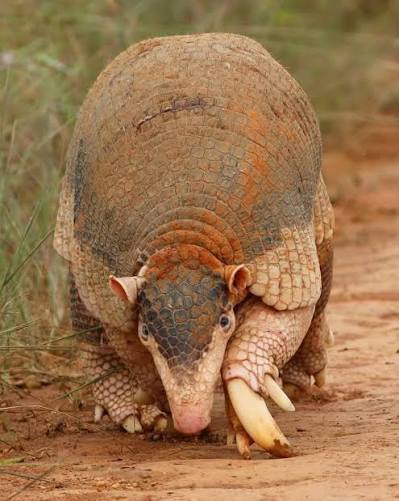
Table of Contents
What they may find instead is a large burrow, freshly disturbed soil, or a termite mound that has been opened by powerful claws.
Known scientifically as Priodontes maximus, the giant armadillo is the largest living armadillo in the world. It is one of Guyana’s more elusive mammals and an important part of the natural landscapes around Kaieteur Falls and Orinduik Falls.
A direct sighting is rare, but that rarity makes the experience even more memorable.
An Armoured Giant
The giant armadillo is instantly recognisable. Its body is covered by a dark, flexible shell made up of overlapping bands. This armour protects the animal while still allowing it to bend and move as it digs.
It also has a long snout, small eyes, rounded ears, a scaly tail, and extremely powerful front claws.
Those claws are its most important tools. The animal uses them to open termite mounds, dig through soil, create burrows, and search for food beneath fallen branches and decaying vegetation.
A giant armadillo may look slow and awkward when walking, but it is an impressive digger. If frightened, it may use the soil as protection and disappear underground surprisingly quickly.
Around Kaieteur Falls
Kaieteur Falls is surrounded by rainforest, rivers, cliffs, and an extraordinary variety of plants and animals. The broader region also includes different habitats that may be suitable for giant armadillos.
They can use forest, savanna, grassland, scrub, and areas close to streams or wetlands. The most important features are usually suitable soil, insect colonies, water, and enough undisturbed habitat for the animal to move and forage.
The waterfall viewing area is not a guaranteed place to see one. Giant armadillos are solitary animals with large home ranges, so they may be far from trails and visitor areas.
A guide may notice signs that most visitors would walk past without recognising. A deep burrow, claw marks in the soil, or a damaged termite mound can all tell part of the story.
Around Orinduik Falls
Orinduik Falls lies along the Ireng River, near Guyana’s border with Brazil. The area has a striking mixture of rocky river scenery, open grassland, woodland, and forest.
That combination creates suitable conditions for a number of mammals, including the giant armadillo. It may forage in open areas where ants and termites are easy to find, then retreat to nearby vegetation or a burrow when it needs shelter.
It is not an animal that follows a predictable route. One night it may travel across the savanna, while on another it may remain close to forest cover. This makes local knowledge particularly valuable for anyone interested in finding signs of its activity.
Visitors should not expect to see one simply by walking through the area. The animal is usually underground during the day, and even at night it moves quietly.
What Does It Eat?
The giant armadillo feeds mostly on ants and termites. Using its large front claws, it breaks into mounds and digs through soil to reach insect colonies.
Its diet may also include:
- Worms.
- Spiders.
- Beetles and other insects.
- Insect larvae.
- Small snakes.
- Carrion.
- Other small invertebrates.
After opening a nest, the armadillo usually does not remain there for long. It feeds quickly and then moves away, reducing the chance of being attacked by large numbers of insects.
Fresh feeding sites can be easy to recognise once a guide points them out. Soil may be scattered around the entrance of a termite mound, or sections of the mound may have been torn open.
Life Beneath the Surface
Giant armadillos spend much of the day resting in burrows. They usually become active after sunset, when they begin searching for food.
They generally live alone and can travel long distances during a night of foraging. Because they are rarely seen and often move through remote areas, scientists still have much to learn about their behaviour.
Their burrows are important beyond the life of the armadillo itself. Once abandoned, they may provide shelter for other animals. In that way, this solitary mammal can help create hiding places within the wider ecosystem.
The species is also a reminder that wildlife is not always visible. Sometimes, the evidence of an animal’s presence is the most realistic and rewarding discovery.
Signs to Look For
A guide may look for several clues when searching for giant armadillo activity:
- Large burrows.
- Freshly turned soil.
- Deep claw marks.
- Opened termite mounds.
- Tracks in soft ground.
- Scratches around fallen logs.
- Narrow trails through grass.
- Feeding areas near tree roots.
Not every burrow or disturbed mound belongs to a giant armadillo. Other animals also dig and forage, so signs need to be interpreted carefully.
If you find a possible burrow, do not approach too closely. The animal may still be inside, even if the entrance appears empty.
Conservation Challenges
The giant armadillo is classified as Vulnerable. It occurs at low densities, reproduces slowly, and needs large areas of connected habitat. These characteristics make it particularly sensitive to hunting, habitat loss, roads, fires, and human disturbance.
Community-based conservation is helping improve knowledge of the species in Guyana. In the Rupununi, local organisations and Indigenous communities have supported research and wildlife protection involving giant armadillos and other threatened animals.
Protecting the giant armadillo means keeping both forest and savanna healthy. It also means protecting the quiet places where the animals dig their burrows and raise their young.
How Visitors Can Help
If you encounter a giant armadillo or find a suspected burrow, give it plenty of space.
- Never enter a burrow.
- Do not place cameras or equipment at the entrance.
- Avoid loud noises nearby.
- Never attempt to touch, feed, or handle the animal.
- Do not block its route.
- Follow your guide’s instructions.
- Avoid sharing the exact location of burrows online.
For a species this secretive, even well-intentioned visitors can cause harm without realising it. Quiet observation is always the better choice.
A Rare Wildlife Encounter
The giant armadillo is not easy to find, and that is part of what makes it so fascinating. It lives quietly beneath the surface, emerging when the forest and savanna are dark and calm.
Visitors to Kaieteur Falls and Orinduik Falls may come for the waterfalls and dramatic scenery, but the surrounding landscapes hold many other stories. A torn termite mound, a trail through the grass, or a freshly dug burrow may reveal that a giant armadillo has been nearby.
And if you are lucky enough to see one in person, even for a few seconds, it is likely to become one of the most memorable moments of your Guyana journey.
Frequently Asked Questions
Can I see a giant armadillo near Kaieteur Falls?
It may occur in suitable habitat in the wider Kaieteur region, but sightings are rare. The species is mainly nocturnal and spends much of the day underground.
Are giant armadillos found near Orinduik Falls?
The surrounding forest, savanna, and river-edge habitats may provide suitable conditions. Your local guide can help identify fresh signs of activity.
Are giant armadillos dangerous?
They usually avoid people, but their claws are very strong. Never approach, corner, touch, or attempt to handle one.
What is its scientific name?
The scientific name is Priodontes maximus.
What does it eat?
It mainly eats ants and termites, along with other insects, worms, spiders, small reptiles, carrion, and other invertebrates.
When is it active?
The giant armadillo is primarily nocturnal and usually leaves its burrow after dark to search for food.
Join Gy Tours to explore Guyana’s forests, savannas, rivers, and waterfalls, and discover the wildlife signs that reveal the presence of the country’s secretive giant armadillo.