
When people think about Guyana’s wildlife, this animal is often one of the first animals that comes to mind. This powerful cat, known scientifically as Panthera onca, is Guyana’s national animal and one of the most remarkable mammals found in South America.
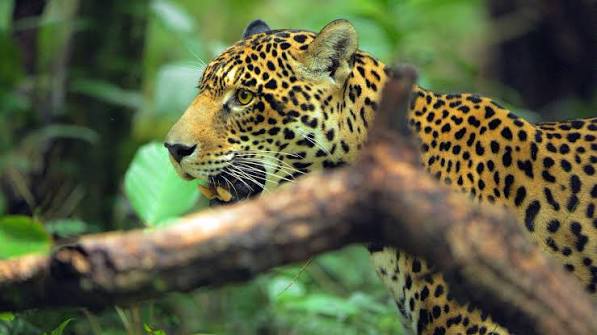
Table of Contents
Visitors travelling to Kaieteur Falls and Orinduik Falls may hope to catch a glimpse of a jaguar in the wild. However, these animals are extremely difficult to see. Jaguars are solitary, cautious, and perfectly adapted to moving quietly through dense forest, along riverbanks, and across open savanna.
Even without seeing one, knowing that jaguars move through these landscapes makes a visit to Guyana’s interior even more special.
What Does This Beautiful Cat Look Like?
The jaguar is the largest cat in the Americas. It has a broad head, muscular body, short legs, and a thick tail. Its golden coat is covered in dark rosettes, many of which have smaller black spots inside them.
This pattern helps the jaguar disappear into the forest. In the filtered light beneath the trees, the animal’s markings can make it surprisingly difficult to notice.
Some jaguars have very dark coats. These are melanistic jaguars, often called black panthers. Their spots have not disappeared completely; they can still be seen when the light falls on the coat at the right angle.
The jaguar is also famous for its powerful bite. Unlike many other big cats, it can crush the shells of turtles and bite through the skulls of some prey.
Jaguar Habitat Around Kaieteur Falls
Kaieteur Falls is surrounded by the ancient forests of the Guiana Shield, a region known for its dramatic scenery and outstanding biodiversity. The rainforest around the falls provides cover, water, and food for a wide variety of wildlife.
They do not stay in one small area. They travel across large territories, following prey and using natural routes such as riverbanks, forest trails, and areas of thick vegetation. This means that the wider landscape around Kaieteur Falls may be more important to the animal than any single viewpoint or trail.
A jaguar sighting near the falls would be an unforgettable experience, but it should never be expected. In the wild, the animal is much more likely to notice you first and disappear before you even know it was there.
Jaguars Around Orinduik Falls
Orinduik Falls lies on the Ireng River, close to the border with Brazil. The surrounding area includes rocky river scenery, forest, and open savanna. This variety of habitats is important because jaguars can use both wooded and more open environments.
The river provides water and may attract prey, while the surrounding vegetation offers shelter. Jaguars are strong swimmers and are quite comfortable near water, where they may hunt fish, reptiles, turtles, and other animals.
The landscape around Orinduik Falls is remote and wild. That sense of distance from towns and roads is part of what makes the area so appealing to wildlife enthusiasts.
What Does a Jaguar Eat?
Jaguars are carnivores and opportunistic hunters. They eat whatever suitable prey is available in their territory. Their diet may include:
- Capybaras.
- Peccaries.
- Deer.
- Tapirs.
- Armadillos.
- Agoutis.
- Monkeys.
- Giant anteaters.
- Fish.
- Turtles.
- Caimans.
- Snakes and other reptiles.
This varied diet helps the jaguar survive in different habitats. Its ability to hunt on land and in water gives it an advantage over many other predators.
As an apex predator, the jaguar also helps keep the ecosystem balanced. By controlling populations of prey animals, it contributes to the health of the forest and savanna.
Jaguar Behaviour
Jaguars usually live alone. The main exceptions are mothers with cubs and brief periods when adults come together to mate.
They communicate through scent marking, scratches on trees, vocal calls, and other signs. A jaguar may be nearby without making a sound, which is one reason these animals are so rarely seen.
Jaguars can be active during the day or night, although they are often more active around dawn, dusk, and after dark. During the heat of the day, they may rest in deep shade or thick vegetation.
If you are walking with a guide, you may hear about tracks, scratches, or other signs of wildlife. These clues can be exciting, even when the animal itself remains hidden.
Are Jaguars Endangered?
The jaguar is classified as Near Threatened. Habitat loss, illegal hunting, declining prey populations, and conflict with people are among the main threats facing the species.
Guyana is particularly important for jaguar conservation because large areas of the country still contain intact forests, rivers, and savannas. These connected habitats give jaguars room to move and help maintain healthy prey populations.
Protecting jaguars also means protecting many other species. A healthy jaguar habitat is usually a healthy habitat for monkeys, deer, reptiles, birds, amphibians, and smaller mammals as well.
How Visitors Can Help
Anyone visiting Kaieteur Falls or Orinduik Falls can help protect Guyana’s wildlife by travelling responsibly.
Remember to:
- Stay with your guide.
- Keep a respectful distance from wild animals.
- Never feed or approach a jaguar.
- Avoid making loud noises or playing animal calls.
- Take all rubbish with you.
- Do not chase wildlife for photographs.
- Follow the advice of local guides and communities.
- Avoid publicly sharing the exact location of rare animals.
Responsible tourism allows visitors to enjoy these places without disturbing the wildlife that makes them special.
The Jaguar’s Place in Guyana
The jaguar is not simply a beautiful animal to look for during a trip. It is a sign that Guyana’s forests, rivers, and savannas are still functioning as natural ecosystems.
A visit to Kaieteur Falls or Orinduik Falls may not include a jaguar sighting—and most visitors will never see one. Still, there is something exciting about travelling through a landscape where this elusive predator may be moving silently through the forest.
The waterfalls may be the main reason for your journey, but the wildlife surrounding them tells an equally important story. In Guyana, the jaguar remains one of the most powerful symbols of the country’s wild and enduring natural heritage.
Frequently Asked Questions
Can I see a jaguar near Kaieteur Falls?
Jaguars may use the wider area, but sightings are rare. They are shy, solitary animals that usually avoid people.
Are jaguars found near Orinduik Falls?
The forests, rivers, and savannas around Orinduik Falls can provide suitable jaguar habitat, although a sighting is never guaranteed.
Are jaguars dangerous?
Jaguars are powerful wild animals, but they generally avoid humans. Visitors should never approach, feed, or attempt to attract one.
What is the scientific name of the jaguar?
The scientific name is Panthera onca.
What should I do if I see a jaguar?
Stay calm, keep your distance, follow your guide’s instructions, and never chase the animal for a photograph